
entrée libre

Summary:
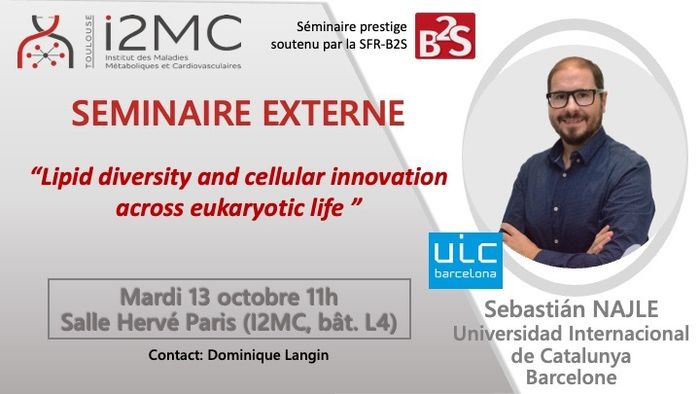
Lipid chemical diversity underlies a remarkable range of cellular functions, from membrane identity to organelle biogenesis to signalling. Yet how this diversity evolved, and how lipid metabolism and function are regulated across eukaryotic life, remains poorly understood. Our lab addresses these questions through comparative cell biology across diverse eukaryotes including unicellular holozoans (the closest living relatives of animals), other protists such as the ciliate Tetrahymena, and placozoans, among the simplest known animals. By comparing these lineages, we can identify conserved features of cellular lipid biology while uncovering lineage-specific innovations.
This approach has already revealed unexpected aspects of eukaryotic lipid biology. We identified a sterol-modifying enzyme conserved across ciliates and most holozoans but subsequently lost in mammals, and characterized a novel sterol biosynthesis pathway in the holozoan Capsaspora owczarzaki. In parallel, we have established transgenic and CRISPR-based tools for functional studies in unicellular holozoans and generated functional genomics resources across these systems. Building on this foundation, my new lab is now asking how lipid structural diversity itself shapes cellular organization and physiology. We are particularly interested in the diversity and biology of lipid droplets, as well as specialized lipid-rich cell types such as placozoan lipophil cells. By combining comparative and functional approaches, we aim to uncover how novel lipid states and metabolic pathways have driven cellular innovation across eukaryotic evolution.
CV & representative publications:
Sebastián Najle is a Group Leader in the Department of Biomedical Sciences at the Universidad Internacional de Catalunya (UIC), Spain, where he leads the Comparative Cell Biology Laboratory under a Ramón y Cajal fellowship. He earned his PhD in Biological Sciences from the National University of Rosario (Argentina), studying sterol metabolism in protists (microbial eukaryotes), before moving into evolutionary cell biology as a postdoctoral researcher with Iñaki Ruiz-Trillo (IBE-CSIC-UPF) and Arnau Sebé-Pedrós (CRG, Barcelona). His work spans the discovery of novel sterol conversion pathways in unicellular holozoans, the development of transgenesis and CRISPR-Cas9 tools for these organisms, and comparative single-cell genomic studies in placozoans that revealed key insights into the evolutionary origin of neurons. His lab aims to understand how lipid diversity and its regulation shape cellular phenotypes, and how the molecular mechanisms underlying lipidome homeostasis evolve across eukaryotic life.
1. Ara P.S., Casacuberta E., Scazzocchio C., Ruiz-Trillo I., Najle S.R. 2025. “CRISPR-Cas9 genome editing in Corallochytrium limacisporum, a key species for understanding animal origins”. Open Biol. 15(7): 250066. doi:10.1098/rsob.250066.
2. Najle S.R., Grau-Bové X., Elek A., Navarrete C., Cianferoni D., Chiva C., Cañas-Armenteros D., Mallabiabarrena A., Kamm K., Sabidó E., Gruber-Vodicka H., Schierwater B., Serrano L., Sebé-Pedrós A. 2023. “Stepwise emergence of the neuronal gene expression program in early animal evolution”. Cell. 186(21): 4676–4693. doi: 10.1016/j.cell.2023.08.027.
3. Kożyczkowska A.#, Najle S.R.#, Ocaña-Pallarés E., Aresté, C., Shabardina V., Ara P.S., Ruiz-Trillo I., Casacuberta E. 2021. “Stable transfection in protist Corallochytrium limacisporum identifies novel cellular features among unicellular animals’ relatives”. Curr Biol. 31, 1-7. doi: 10.1016/j.cub.2021.06.061.
4. Najle S.R., Hernández J., Ocaña-Pallarès E., García Siburu N., Nusblat A.D., Nudel C.B., Slamovits C. H., Uttaro A.D. 2020. “Genome-wide transcriptional analysis of Tetrahymena thermophila response to exogenous cholesterol”. J. Euk. Microbiol. 67(2): 209-222. doi: 10.1111/jeu.12774.
5. Najle S.R., Molina M.C., Ruiz-Trillo I., Uttaro A.D. 2016. “Sterol metabolism in the filasterean Capsaspora owczarzaki has features that resemble both fungi and animals”. Open Biol. 6: 160029. doi: 10.1098/rsob.160029.
entrée libre